

Lot n° 222
Estimation :
5000 - 10000
EUR
Result without fees
Result
: 12 000EUR
CRESTON René-Yves (1898-1964) and SEBILLEAU Gaston (1894-195 - Lot 222
CRESTON René-Yves (1898-1964) and SEBILLEAU Gaston (1894-1957)
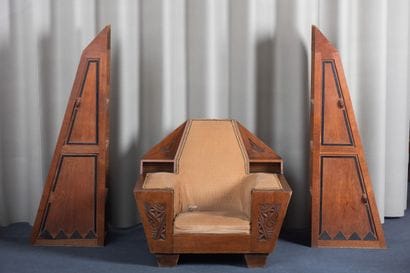
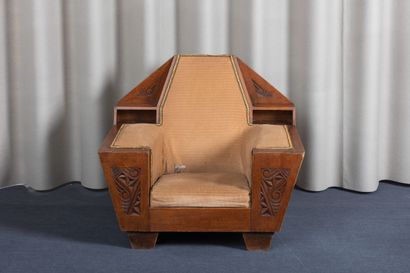
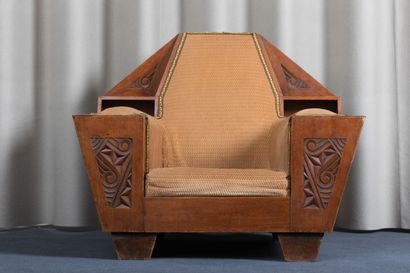
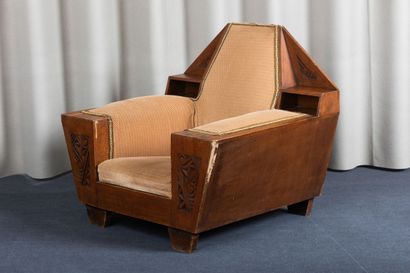
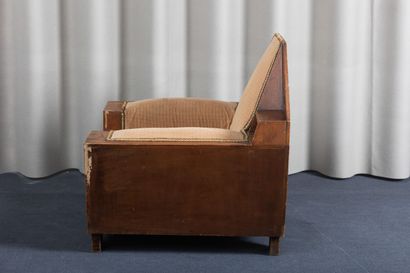
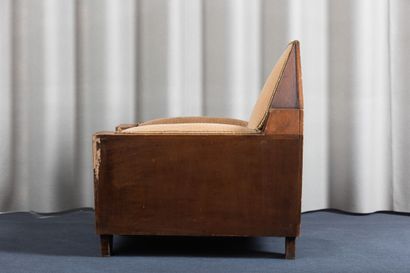
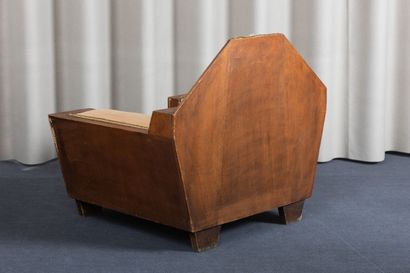
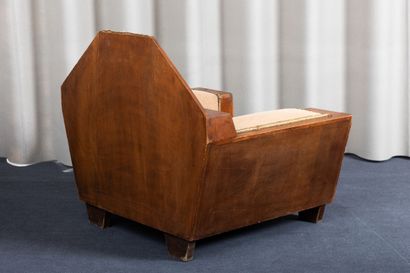
Nominoë" armchair in carved oak
Brittany, circa 1925 1930
Height 87.5 cm - Width 101 cm - Depth 80 cm
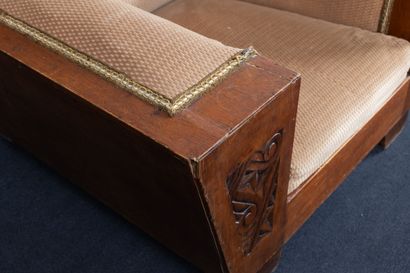
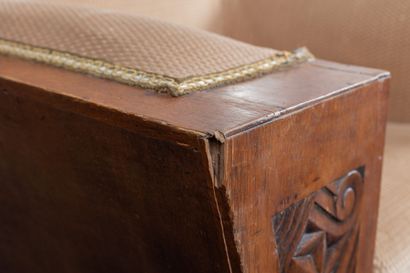
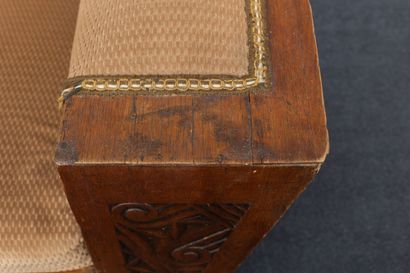
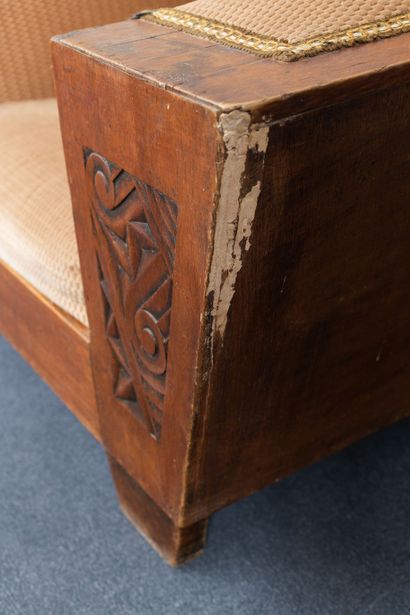
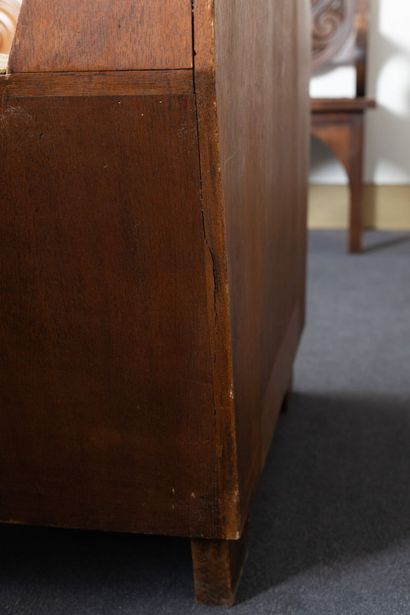
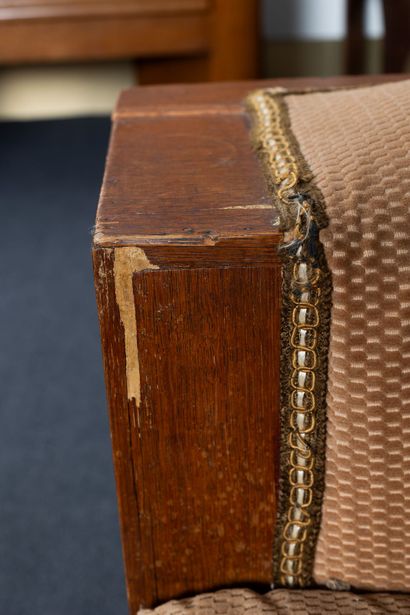
Cracks, missing parts and wood pulp reinforcements (accidents).
Provenance of Gaston SEBILLEAU's family.
One example is in the collections of the Musée départemental breton, Quimper.
References :
- Similar model sold at Bretagne Enchères on Tuesday, March 4, 2003
- Similar model in the exhibition catalog AR SEIZ BREUR "La création Bretonne entre tradition et modernité", page 82, Project by René Yves CRESTON, Carpenter Gaston SEBILLEAU
Comments :
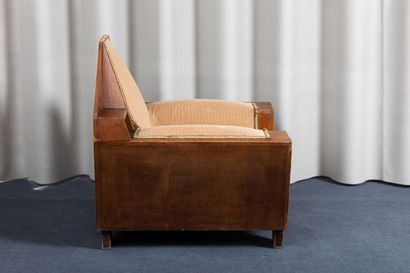
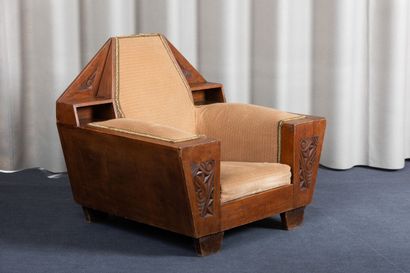
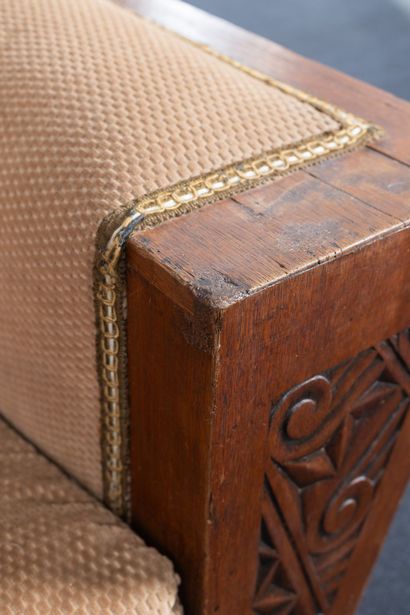
An armchair with an architectural structure in stained oak, forming a body with powerfully geometric volumes. The solid, slightly sloping sides are adorned with panels carved with stylized Celtic-inspired motifs, inscribed in rectangular cartouches. The armchair rests on four short, stocky legs integrated into the frame, accentuating its solid, stable character.
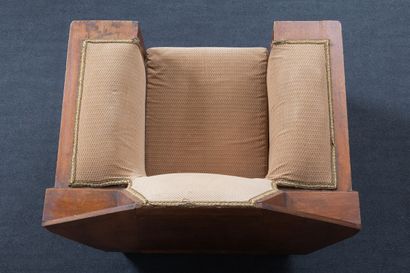
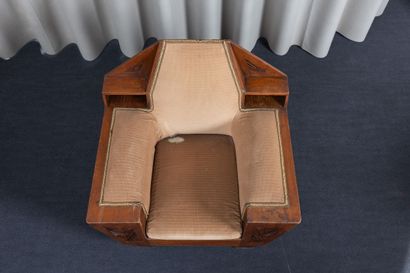
The high, trapezoidal backrest is fully upholstered in velvet and encased in a wooden surround forming two carved triangular cheeks. The thick seat and wide horizontal armrests are also upholstered in velvet. On either side, rectangular niches integrated into the frame give the ensemble a rare functional dimension.
The synthesis of formal modernity, references to Breton art and monumental furniture makes this armchair an emblematic example of Breton regionalist Art Deco.
The "Nominoë" armchair is part of the movement of Breton regionalist Art Deco furniture developed in the 1920s and 1930s by the artists of the Seiz Breur movement, and more particularly in the work attributed to René-Yves Creston. It stands out for its accomplished synthesis of architectural monumentality, modern functionality and skilful references to Celtic ornamentation.
Compared to other contemporary French Art Deco armchairs (Ruhlmann, Süe et Mare, Dominique), the "Nominoë" model stands out for its rejection of decorative lightness and precious materials. Where Ruhlmann favors slender structures and luxurious veneers, the "Nominoë" armchair asserts a massive solid wood construction, assuming an almost archaic aesthetic of robustness, translated by solid volumes and a visual anchoring to the floor.
Compared with more radical modernist designs (Le Corbusier, Perriand), the "Nominoë" armchair retains a traditional hierarchy of elements (straight back, solid armrests, recessed seat), but treats them according to a strict geometric vocabulary, devoid of superfluous curves. This formal rigor brings the model closer to Art Deco's architectural tendencies, notably those seen in furniture by Maurice Dufrêne or Francis Jourdain, while distinguishing it by its strong regional roots.
Within the Seiz Breur corpus, the "Nominoë" armchair can be compared with :
- furniture by Jeanne Malivel, with its use of stylized Celtic motifs integrated into geometric compositions ;
- the designs of Xavier de Langlais, with their monumental shapes and emphasis on solid wood;
- furniture ensembles designed by René-Yves Creston for modernized Breton interiors, where furniture becomes a structuring element of the space.
However, the "Nominoë" armchair stands out for the integration of functional side niches, a feature rarely found in French Art Deco furniture, and which reinforces its character as a "total" piece of furniture, both a seat and an element of interior architecture. This characteristic brings it closer to certain contemporary Germanic or Nordic designs, where furniture tends to integrate ancillary functions into a single formal unit.
Finally, compared with regionalist armchairs from other French regions (Basque furniture, Art Deco Savoyard furniture), the "Nominoë" model stands out for its highly controlled stylization of decoration, avoiding picturesqueness or folkloric overload. The Celtic motifs, reduced to graphic signs in low relief, play a full part in the visual structure of the furniture, without detracting from its modernity.
The design of the "Nominoë" armchair makes it an emblematic work of Breton Art Deco, illustrating Seiz Breur's desire to create modern furniture rooted in a strong cultural identity. Its inclusion in the collections of the Musée départemental breton de Quimper confirms its status as a benchmark in the history of 20th-century French regional design.
My orders
Sale information
Sales conditions
Return to catalogue